
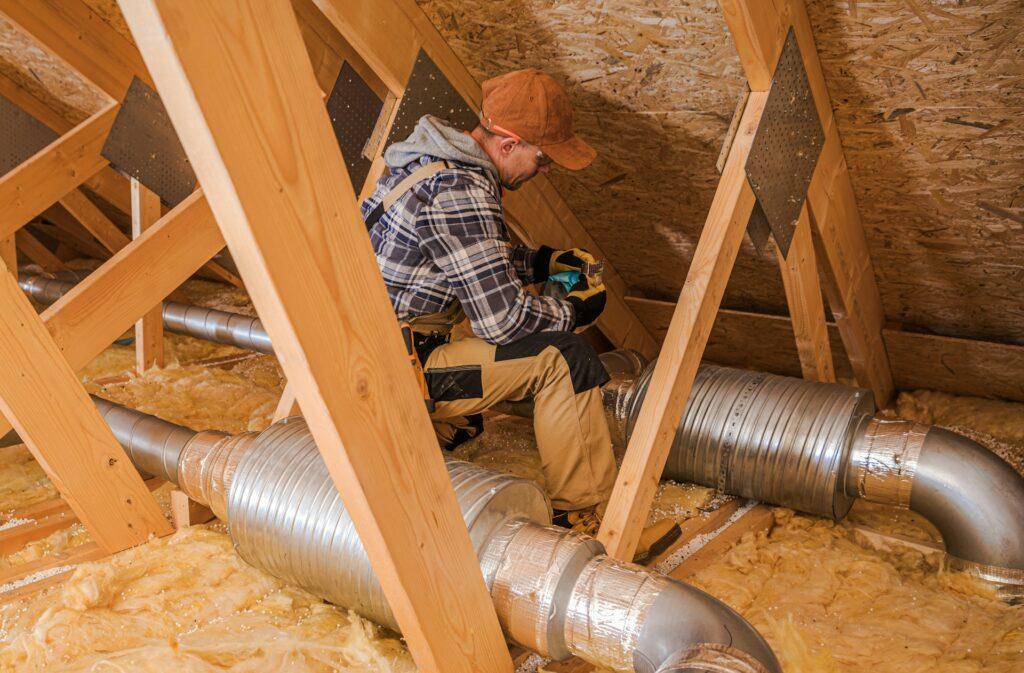
Warm air can slip out of your home through small openings long before it has a chance to keep your rooms comfortable. In Detroit, that can mean chilly floors, drafty bedrooms, and a heating system that seems to run without giving you the comfort you expect.
We encourage you to think about air sealing before winter weather settles in. Early November is a practical time to find hidden gaps, reduce unwanted airflow, and prepare your home for the long Michigan heating season.
Keep Warm Air Inside Before Winter Arrives
A furnace or boiler can only do so much when warm air is escaping through cracks around the home. Many Detroit homes, especially older ones, have small gaps that are easy to overlook. Each opening may seem minor, but together they can make your home feel unevenly heated.
Residential air sealing in Detroit focuses on reducing those unwanted air paths. Rather than letting heated air drift into the attic, walls, basement, or outdoors, sealing work helps keep more of it inside the living spaces where you need it.
When we assess a home, we look at how different areas work together. That helps us identify improvements that may have the biggest effect on comfort and energy waste, instead of recommending changes that do not address the real source of drafts.
Addressing leaks before deeper cold arrives can help you enter winter with:
- Fewer cold spots near outside walls, doors, and windows
- More even temperatures between rooms
- Less strain on heating equipment
- Better control over the comfort of your living space
Find the Leaks That Raise Winter Heating Bills
Most air leaks are not obvious. You may notice a draft near a window, but the larger source of the problem could be somewhere else entirely. Openings in upper and lower parts of the home often work together to move air through the structure.
Common trouble spots include:
- Attic hatches and openings around recessed lighting
- Gaps around plumbing pipes, wiring, and other utility lines
- Basement rim joists and connections between the foundation and framing
- Exterior doors, windows, dryer vents, and other wall penetrations
One reason these leaks matter is something called the stack effect. Warm air naturally rises. During winter, it can escape through gaps in an attic or upper floor. As that air leaves, colder outdoor air can be pulled in through openings lower in the home.
That cycle can make basements feel colder, create drafts near exterior doors, and leave upstairs bedrooms at a different temperature than the rest of the house. It can also make a heating system work harder to hold the thermostat setting.
With residential air sealing in Detroit, we can help locate priority leaks and determine where improvements may make the most sense. A professional assessment is useful because air movement is not always easy to trace by sight alone.
Why Air Sealing Improves Everyday Comfort
Lower energy waste is one reason to seal air leaks, but comfort is often what people notice first. When cold outdoor air has fewer ways to enter, rooms may feel steadier from morning to night. You may also notice fewer cold floors and less of that uncomfortable chill near doors and windows.
Older homes can be especially challenging because they may have original features, aging insulation, or construction details that allow more airflow. We look beyond a single draft and consider how the attic, exterior walls, basement, heating equipment, and ventilation needs relate to one another.
Keeping heated air indoors longer may also help a furnace or boiler avoid cycling as often to maintain your preferred temperature. That does not mean every home will respond in the same way, which is why an assessment matters. Your home’s age, condition, insulation levels, and current equipment all affect the right plan.
Air sealing should be done with care. Closing openings without considering moisture, combustion safety, and ventilation can create new concerns. We recommend qualified work that treats your home as a complete system, not just a collection of cracks to fill.
Pair Air Sealing with Smart Energy Upgrades
Air sealing and insulation work well together because they solve different problems. Insulation slows heat transfer through surfaces such as attic floors and walls. Air sealing reduces the movement of warm indoor air through gaps and openings. One does not replace the other.
Depending on what we find during an assessment, we may discuss improvements such as attic insulation, duct-related upgrades, high-efficiency furnaces, or water heaters. The best combination depends on the home and the equipment already in place.
For Michigan homeowners, available state and utility rebate programs may help reduce the upfront expense of qualifying energy-efficiency improvements. Program rules, household requirements, eligible measures, and available funding can change, so we encourage you to verify current details before making decisions.
A thoughtful plan often starts with the parts of the home that are losing the most energy. Once air leaks and insulation needs are addressed, heating equipment may be better positioned to serve a more comfortable, efficient home.
Prepare Your Home for a More Comfortable Winter
Severe weather can make drafts and uneven temperatures harder to ignore, but the source of the problem often began with hidden gaps that have been there for years. An assessment can give you a clearer view of where air is moving through your home and which improvements deserve attention first.
Residential air sealing in Detroit can be a practical part of winter preparation, especially when paired with the right insulation and heating upgrades. By reducing unnecessary airflow before the coldest months arrive, you can support warmer rooms, steadier comfort, and less wasted energy throughout the season.
Make Your Home Ready for Colder Days
At 1 American Smart Energy, we help homeowners address the gaps that can affect indoor comfort and energy use. Learn how residential air sealing in Detroit can fit into your home improvement plans. When you are ready to discuss your needs, contact us to request an assessment.